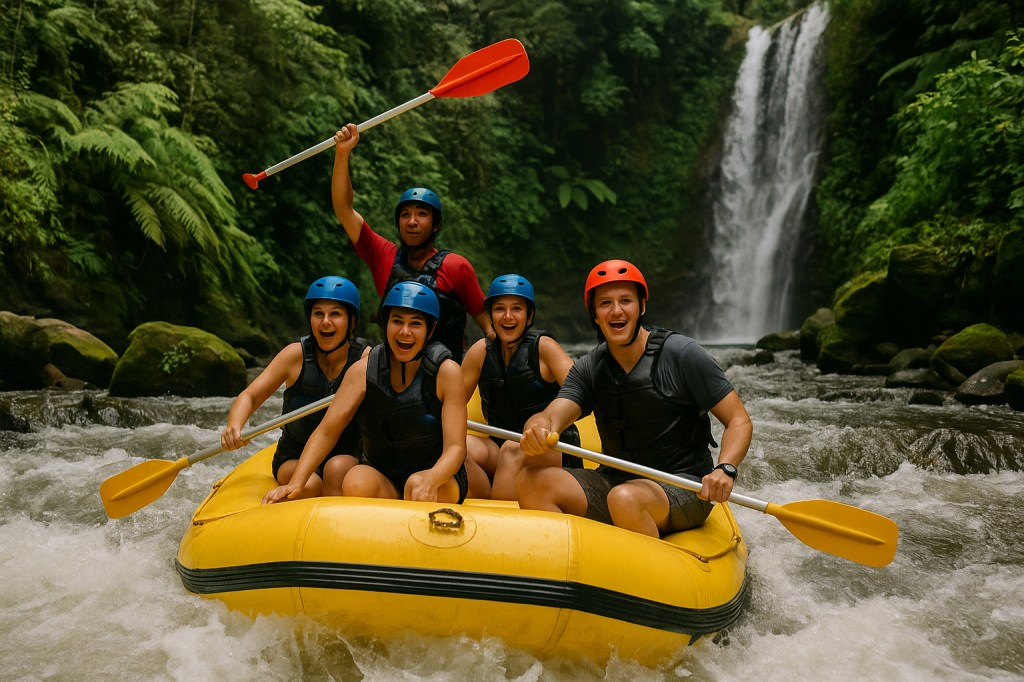
So let’s just get this outta the way first: Telaga Waja river rafting Bali is one of the best things you can do if you’re visiting East Bali and want something more than just temples and beach clubs. I’m not saying that lounging in Canggu isn’t a vibe—believe me, I’ve done plenty of that—but sometimes you just want to feel alive, ya know? That’s what Telaga Waja gives you. It’s raw, real, and a little ridiculous in the best way possible.
Read also: How Much is a Driver in Bali?
What Is Telaga Waja River Rafting All About Anyway?
Alright, let me break it down for you real simple. Telaga Waja River is located in Karangasem Regency, East Bali. It’s about a 2-hour drive from the usual suspects like Ubud or Seminyak, depending on traffic. But oh man, it’s worth the trek. Unlike the more famous Ayung River in Ubud, which is honestly kinda tame unless it’s raining, Telaga Waja has more bite to it.
We’re talkin’ class III and IV rapids here. That means you’re definitely getting wet, probably screaming, and maybe even questioning your life decisions at some point mid-ride (in a good way). The river stretches over 14km and the ride takes about 2.5 hours, give or take. Trust me, your arms will feel it afterward.
The thing that makes Telaga Waja stand out though isn’t just the rapids—it’s the setting. This river cuts through thick jungle, waterfalls, rice terraces, and even goes under a little bamboo bridge at one point. It’s legit cinematic. Like, you’ll want to go back through your GoPro footage just to double-check if it was real.
My First Time Was a Disaster… But in the Fun Way
Okay, story time. First time I did Telaga Waja rafting, I was overly confident. I thought, “How bad can it be? I’m from here. I’ve done Ayung. I’ve surfed in Kuta. Bring it on.” Mistake.
I wore flip-flops (rookie move), forgot to bring a dry bag, and thought I could keep my phone in a ziplock in my shorts pocket. Long story short, I lost the flip-flops, cracked my phone screen, and had the time of my life. I laughed so hard my jaw hurt the next day. I also slipped climbing back into the raft and got a nice bruise that looked like Bali itself for a week. Not kidding.
So yeah, lesson learned. Telaga Waja is wild in all the best ways—but it demands respect. You’re out in nature, flying over rapids, sometimes getting launched in the air and sucked back in. You gotta come prepared, both mentally and gear-wise.
What You Actually Need to Know Before Booking
Let’s get into the nitty-gritty, because this is the stuff I wish someone had told me before I went. There’s a lot of “Instagram vs reality” going on out there when it comes to Bali adventure tours.
Best Time to Go Rafting on Telaga Waja
So here’s the thing—you can technically go all year round, but the experience totally changes depending on the season.
- Dry Season (April to October): This is the safest and most popular time. The water levels are lower, which means the rapids are a little calmer and it’s easier for beginners. Views are clear, skies are usually blue, and the scenery is stupid beautiful.
- Rainy Season (November to March): The rapids get way more intense. Like, white-knuckle intense. If you’re an adrenaline junkie, this is your jam. But if you’re not super confident in water, maybe skip this season.
What to Bring (and What Not To)
Okay, don’t make the same mistakes I did. Here’s what you actually need:
- Secure water shoes or sandals with straps – Leave the flip-flops at the villa.
- Change of clothes – You’ll get soaked. Like, “I-just-jumped-in-a-river” soaked.
- Towel – Seems obvious, but you’d be surprised how many folks forget.
- Dry bag or waterproof phone case – If you absolutely must bring your phone.
- Cash for tips or cold drinks – Most places don’t take cards in that area.
And please, for the love of all things good, don’t wear jeans. You’ll hate yourself.
Is It Safe Though? Let’s Be Real
People ask me this a lot. “Hey Broto, is Telaga Waja rafting safe?” And my answer is… mostly, yes. But you gotta choose the right operator.
There are like a dozen companies offering tours on the Telaga Waja River. Some of them are super pro—well-maintained gear, trained guides, proper safety briefings. Others? Ehh… not so much. You can usually tell by the price. If it sounds way cheaper than everyone else, ask yourself why.
Look for companies that offer:
- Life jackets and helmets that actually fit
- Certified river guides who speak decent English
- Insurance coverage (ask for proof!)
- Small group sizes (big groups = chaos)
I’ve rafted with Sobek, BMW Rafting, and Telaga Waja Adventure. All solid. But even the best guides can’t stop you from being a little reckless, so follow the safety rules, alright?
The Unexpected Stuff That Made It Awesome
Here’s the stuff no one really tells you in those glossy brochures or sponsored blog posts.
- The water is cold. Not freezing, but cold enough to make you gasp if you fall in. It’s actually super refreshing, especially when the sun’s blazing, but if you’re sensitive to temps, maybe layer up a bit.
- The rice fields. Midway through, you’ll float past these epic, bright green rice paddies. It’s so peaceful that it feels like you’re suddenly in a Miyazaki film. You can literally hear frogs and distant roosters. Then BAM—more rapids.
- Waterfalls. There are several small waterfalls along the way. One of them, if your guide’s chill, you can go under. It’s like nature’s shower and feels amazing after all the adrenaline.
- That One Drop. Near the end of the course, there’s a 4-meter drop that looks scarier than it is. It’s 100% safe but totally stomach-flipping. And yeah, someone always screams. Sometimes it’s me.
Who Should Actually Do This? (And Who Probably Shouldn’t)
Okay, real talk. Telaga Waja rafting ain’t for everyone.
If you’re traveling with:
- Young kids under 8 – Most operators won’t even let them ride.
- Elderly folks or anyone with back/knee issues – The boat does not go easy on your spine.
- People who can’t swim – While you’re wearing a life vest, it’s still risky if you panic in the water.
- Folks afraid of water or fast movement – This is not a gentle floaty river cruise.
But if you’ve got a decent fitness level, can handle a little chaos, and want a story to tell back home? This one’s gonna stick with you.
Other Stuff To Do Nearby After You’re Soaked and Sore
Don’t just get back in the van and leave. You’re already in East Bali—might as well explore a little.
- Tirta Gangga Water Palace – Only like 30 minutes away. Super chill, gorgeous koi ponds, statues, and you can dip your toes in if it’s hot.
- Lempuyang Temple (“Gates of Heaven”) – Insta-famous, yes. But also genuinely cool if you go early or don’t mind skipping the photo queue.
- Local warungs – Forget fancy restaurants. Stop at any roadside warung for some nasi campur and an ice-cold Bintang. You’ve earned it.
What It Actually Costs (And What You Get)
You’ll see prices ranging from IDR 300,000 to 700,000 per person (~$20–$45 USD). That usually includes:
- Hotel pick-up & drop-off
- Rafting equipment (helmet, paddle, vest)
- Guide and river entrance fee
- Buffet lunch (often better than you’d expect)
Watch out for “too good to be true” deals. Some of them leave out the transport, or worse—serve up sketchy safety practices. Always read reviews, and if you’re staying in a hotel or guesthouse, ask them to book with someone they trust.
Why I Keep Coming Back Even After 6 Times
You’d think after the 2nd or 3rd time, the novelty would wear off. But nah. Every trip down the Telaga Waja River is a little different. Sometimes the river’s higher. Sometimes I bring new friends and get to watch them freak out in the best way. Sometimes the sun hits the cliffs just right and it feels like I’m in some fantasy movie.
It’s one of those rare activities in Bali that actually lives up to the hype—no filters needed. And it connects you to the island in a way that beach lounging just doesn’t.
How to Book Telaga Waja River Rafting Without Getting Ripped Off
So this part’s important. Booking in Bali can feel like a bit of a gamble sometimes, especially if you’re walking around and suddenly someone’s waving a laminated brochure in your face offering “special price today only.” Look, I’ve lived here long enough to tell you: 90% of those prices are negotiable, and sometimes, it’s just better to book online before you even get to Bali.
Here’s the breakdown:
- Direct with Operator: Companies like BMW Rafting and Sobek have websites you can book through. They’ll usually give you the full package: transport, lunch, guide, etc.
- Local Tour Counters: These are everywhere in Ubud, Kuta, Seminyak, Sanur. You can haggle here. If the first guy says 600K, offer 400K and see where it lands. They usually have wiggle room.
- Your Homestay or Hotel: Honestly, this is the safest and usually fair-priced option. Locals have connections with the good operators and often get you better transport pick-up zones too.
- Online Platforms: Klook, Viator, GetYourGuide—they’re convenient, but check the fine print. Sometimes the tour provider is vague and the customer service is slow if something goes sideways. That said, they’re great if you’re not a big haggler.
Oh, and please don’t book from some random dude on the beach. I’ve seen it go wrong too many times. Like, one guy booked rafting, ended up on a sketchy snorkeling boat in Amed. Not even kidding.
What It Feels Like When You’re Actually on the River
Alright, lemme walk you through it like you’re actually in the raft with me.
First off, the guide will shout out some commands: “Boom boom!” (which means duck your head), “Forward!” (paddle), “Stop!” (uhh… stop paddling, obviously), and the all-important “Hold on!” (brace for impact).
The first few minutes are usually calm, kinda like the universe luring you into a false sense of security. Then suddenly—BAM—you hit your first real rapid. Water’s splashing in your face, you’re bouncing like a pinball, someone’s screaming (again, might be me), and the raft’s twisting around sharp rocks like it’s got a mind of its own.
Then it calms down again. You float through these gorgeous narrow canyons where vines hang down and butterflies just casually flutter by like you didn’t almost die 3 seconds ago. There are these random bamboo pipes that cross over the river carrying water from the hills to the rice fields. Feels like you’re in a National Geographic documentary or something.
Then the drops come. There’s one where the whole raft goes down a 1.5-meter slide and another where it feels like you’re going off a cliff (you’re not, it’s like 4 meters max). But man, your heart jumps into your throat every time.
And then… silence. Just jungle sounds, your soggy clothes, and that dumb grin on your face because you did it.
Stuff You’ll Only Learn After You’ve Done It Once
Here’s a few random-but-useful things I’ve only learned after doing Telaga Waja rafting way too many times:
- There’s a sneaky photographer. Somewhere mid-route, there’s always a guy hiding in the bushes taking action shots. You’ll see them printed at the finish line for like IDR 50,000–100,000. Sometimes they’re hilarious. One time mine looked like I was about to cry. Worth every rupiah.
- Don’t eat too much before the ride. I’m all for supporting local warungs but stuffing your face with spicy mie goreng 10 minutes before rafting? Rookie mistake. Just don’t.
- Hold your paddle the right way. Your guide will explain it, but I swear half the people still end up whacking themselves—or others—in the head. Grip it loose, not like you’re trying to slay a dragon.
- Sunscreen is a must, even on cloudy days. That East Bali sun has no chill. Especially since you’re out on the open river for a couple hours.
- You might fall in—and that’s okay. Just don’t panic. Keep your feet up, lean back, and wait for the guide to pull you back in. It’s kinda fun once you get over the shock.
What Makes Telaga Waja Rafting Way Better Than Ayung River (Sorry Ubud)
I love Ubud, I really do. But when people ask me if they should do rafting on the Ayung or Telaga Waja, I don’t even hesitate.
Here’s why Telaga Waja wins:
- Longer ride: Ayung is around 10km, Telaga Waja is up to 14–16km depending on water level. More river = more fun.
- Fewer crowds: Ayung is beautiful but it’s busy. Like, “rafting bumper cars” kind of busy during peak season. Telaga Waja is quieter and feels more remote.
- Bigger rapids: Ayung is mostly class II–III, Telaga Waja throws you into class III–IV. If you’re gonna call it an adventure, make it one.
- Less pollution: Real talk—Ayung has a bit of a trash problem. Telaga Waja? Way cleaner, especially in the upper stretches.
- Waterfalls + rice fields combo: I’ve said it before, but it’s wild how you can be in the middle of this adrenaline-pumping moment and then just… peace. Rice paddies, waterfall mist, and dragonflies everywhere. It’s unreal.
Can You Bring Kids or Older Folks? Kinda…
So I get asked this a lot—“Can I bring my 9-year-old?” or “Can my 65-year-old dad do this?”
Here’s what I tell people:
- Most companies have a minimum age of 8 or 9. And your kid should be pretty brave. If they freak out in a wave pool, probably not a good idea.
- Older folks are okay if they’re fit. Like, if your mom does yoga and goes hiking every weekend, she’ll probably love it. But if she’s got a bad back or knee surgery history, I’d steer clear.
- Everyone has to sign a waiver. So don’t think you can sneak someone in just ’cause they look young or healthy. The guides check.
And for real—if someone’s not feeling it, don’t force them. I’ve seen a few guests bail halfway and it just makes things awkward for the rest of the group.
Random Funny Stuff That Happens Every Time
Part of the charm of doing something over and over is that you start noticing patterns. Here’s some stuff that always happens during Telaga Waja rafting:
- Someone drops their paddle and the guide has to chase it down like a ninja.
- A tourist gets caught under a little waterfall because they’re trying to take a selfie.
- A group tries to splash another raft and then gets destroyed by karma in the next rapid.
- Someone forgets to tighten their helmet and ends up looking like a bobblehead.
- Someone thinks they can “stand up” at a calm section and then hilariously falls in.
It’s all part of the fun. No judgment. You’ll probably do one of these things too—and you’ll laugh about it all the way back to your villa.
 Konte Bali
Leave a comment